
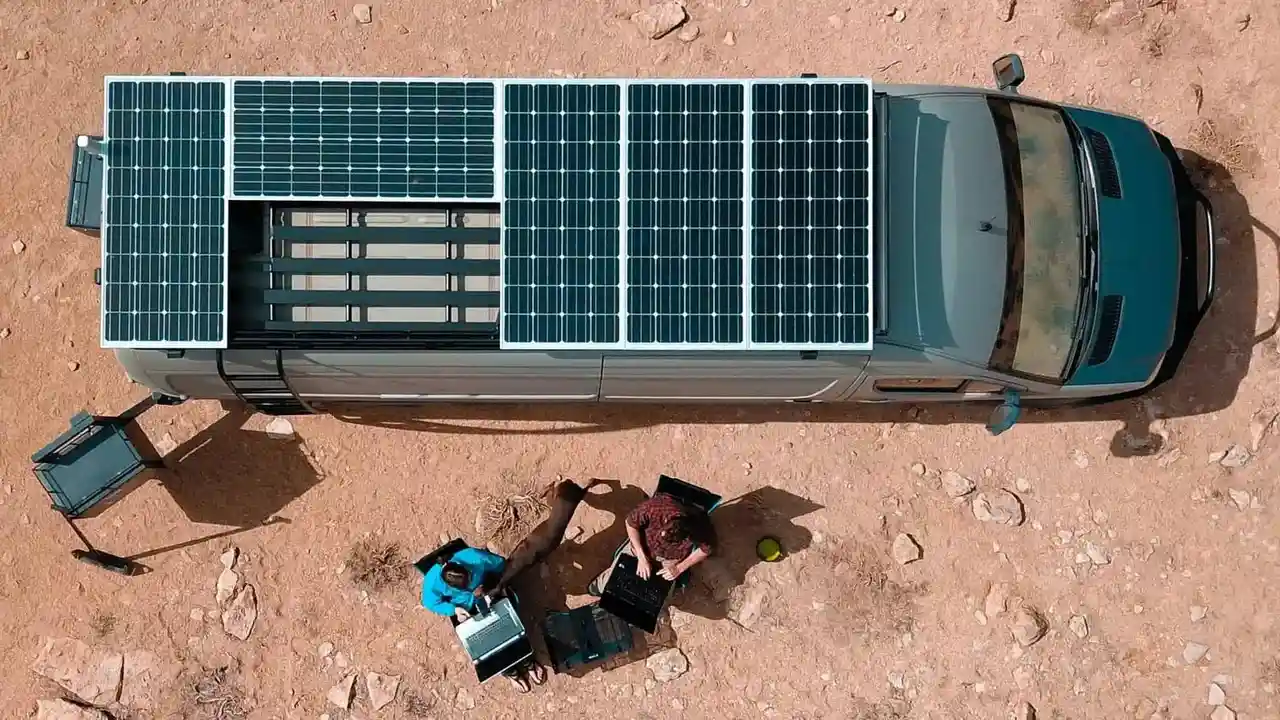
The short answer. If the battery cycles most days, go LiFePO4. You get roughly twice the usable capacity out of the same rated amp hours, five to ten times the cycle life, a third of the weight, and it charges a lot faster off solar or a generator. If the battery sits unused most of the year, or it is cranking an engine, or you cannot change the charger it is connected to, AGM is still fine and you will not get your money back on lithium.
The number that catches everyone out: usable capacity
A 100Ah AGM and a 100Ah LiFePO4 are not the same battery, and the difference is bigger than most people expect. Pull an AGM below about half full regularly and you will destroy it in a season, so a 100Ah AGM really gives you about 50Ah you can use. A LiFePO4 pack will happily go to 80 percent discharged every day for years, so a 100Ah lithium gives you 80Ah or more.
That means one 100Ah lithium does the job of roughly 200Ah of AGM. When you are comparing prices, compare the price per usable amp hour, not the price on the sticker. People who skip that step talk themselves into AGM and then wonder why the fridge dies overnight.
Side by side
Deep cycle AGM compared with LiFePO4, typical figures
| What matters | AGM | LiFePO4 |
|---|---|---|
| Usable capacity | About 50 percent of rated | 80 to 100 percent of rated |
| Cycle life | 300 to 500 cycles at 50 percent discharge | Several thousand cycles at 80 percent discharge |
| Weight for the same usable capacity | Roughly three times heavier | Roughly a third the weight |
| Charge speed | Accepts a big current early, then tapers badly through absorption. The last 20 percent takes hours. | Takes close to full current nearly all the way up. Far better off solar or a generator. |
| Voltage under load | Sags as it discharges, so the inverter and lights notice | Holds almost flat until nearly empty |
| Sitting part charged | Sulphates and loses capacity permanently | Fine for months, prefers it |
| Charging below freezing | Tolerant | Must not be charged below zero unless the pack is heated. Heated models exist. |
| Upfront cost | Lower per rated amp hour | Higher per rated amp hour, usually lower per usable amp hour over its life |
What it actually costs over ten years
Take a caravan that needs about 1kWh a day. In AGM terms that is 200Ah of battery to get 100Ah usable, replaced somewhere between every two and four years depending how hard you are on it. In lithium terms it is a single 100Ah pack that will still be going in ten years.
Indicative ten year cost for roughly 1kWh a day of usable storage
| Line | AGM | LiFePO4 |
|---|---|---|
| What you have to buy | 200Ah of AGM | 100Ah LiFePO4 |
| Replacements in 10 years | 2 to 4 | None expected |
| Plus the stuff you cannot put a number on | Weight, slow charging, replacing it twice, the one that fails on a long weekend | Lighter, charges faster, usually still going when you sell the van |
Figures are indicative and depend on how hard the battery is worked. Use our battery calculator to work out what you actually need before comparing prices.
When AGM is still the right call
Stick with AGM if
You are cranking an engine. Lithium is not a starter battery and a drop in pack is not built for that current spike.
The battery lives somewhere that drops below freezing and sits there unused. You cannot charge a LiFePO4 pack below zero without heating, and a heated model costs more again.
You use it three or four weekends a year. You will never reach the cycle life that pays for lithium.
You cannot change the charger. If the charging gear is fixed and lead acid only, forcing lithium in behind it will cost you the battery.
Go lithium if
It cycles most days. Off grid homes, full time vans, liveaboard boats, anything on solar.
Weight or space matters. Boats and caravans especially, where a third of the weight in the same footprint changes what you can carry.
You charge off solar or a generator. Lithium takes the charge fast instead of sitting in absorption burning generator hours.
You want to stop thinking about it. Set it up properly once and it is a ten year decision, not a two year one.
What you need to change when you switch
This is the part people skip and then blame the battery. Lead acid charging and lithium charging are not the same, and getting it wrong will either cook the pack or leave it permanently half full.
Your mains charger, your solar controller and any DC to DC charger all need a lithium charge profile, or replacing. Equalisation must be off, because an equalisation charge is actively damaging to LiFePO4. Alternator charging through a DC to DC unit needs sizing properly, since lithium will take everything the alternator can give and happily cook it. And if the install is a boat or a caravan, the whole lot has to comply with AS/NZS 3004.2, which is a real standard with real requirements, not a sticker.
If you are not sure what you have got, ring us before you order. It takes five minutes and it is cheaper than a wrong battery.
The certification bit, because it matters here
Plenty of imported drop in lithium gets sold into New Zealand boats and caravans without being certified to AS/NZS 3004.2. It looks the same on a web page and it is a different thing entirely when an insurance assessor turns up. Our 24V marine range is certified to that standard, with a bank disconnect output for faults and a pre-alarm buzzer that sounds before anything disconnects, so you get warning rather than a surprise. If you are buying for a boat, ask every supplier for the certification, including us. More on SOK and AS/NZS 3004.2.
Common questions
Is a 100Ah lithium battery the same as a 100Ah AGM?
No. The AGM gives you about 50Ah you can actually use, the lithium gives you 80Ah or more. One 100Ah lithium does roughly the job of 200Ah of AGM.
How much longer does LiFePO4 last?
A deep cycle AGM gives 300 to 500 cycles at half discharge. A quality LiFePO4 cell is rated for several thousand at 80 percent. Cycling once a day, that is one to two years against ten or more.
Can I just drop lithium in where my AGM was?
Usually not without changing the charging. Lead acid profiles are wrong for lithium and an equalisation charge can damage the pack. Check your charger, solar controller and DC to DC unit before you buy.
What happens if it gets cold?
LiFePO4 must not be charged below zero unless the pack is heated. Discharging in the cold is fine. If the battery lives in an unheated space through a Central Otago winter, either go heated or stay with AGM.
Are lithium batteries legal in boats and caravans in New Zealand?
Yes, as long as the installation complies with AS/NZS 3004.2. The battery itself being certified to that standard is what you should be asking about.
Is lithium worth it for a van I use a few weekends a year?
On cost alone, often not, because you will never use the cycles. It can still be worth it for the weight, and because lithium can sit part charged for months without damage where AGM will sulphate and die.
Work out what you actually need
Before you compare prices, work out your daily kilowatt hours. Most people buy too little battery and too much inverter.
Use the battery calculator · Shop LiFePO4 batteries