
Powering a tiny home: what size system do you actually need?
by Brendon Shervell||Tiny home|4 min read
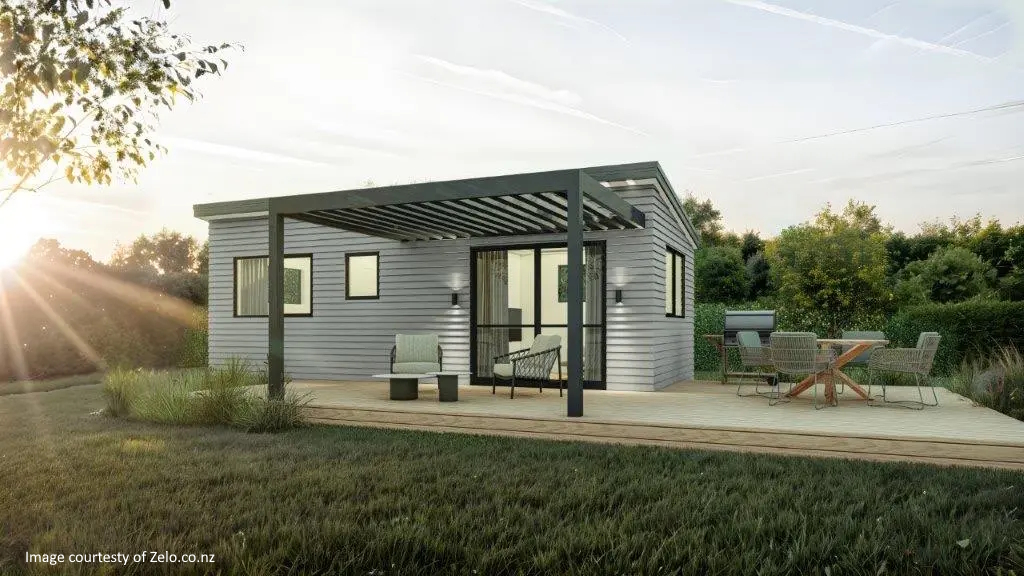
The first question I get at every tiny home stand is "how big a system do I need?"
And my answer is always the same. It depends less on the size of your house and more on 3 things: how you heat your water, how you heat the house, and how you cook.
Get those right and a tiny home runs happily off a fairly small system. Get them wrong and you'll need something twice the size, or a generator running every winter evening.
What a tiny home actually uses
Here are rough daily numbers for the things most people run. Your appliances will vary, but this gets you in the ballpark.
| Appliance | Rough use per day |
|---|---|
| Fridge (efficient, 200 to 300L) | 0.8 to 1.2kWh |
| LED lighting | 0.2 to 0.4kWh |
| Phones, laptop, TV | 0.3 to 0.6kWh |
| Starlink and Wi-Fi | 1 to 1.5kWh |
| Water pump | 0.1 to 0.3kWh |
| Induction cooktop | 1 to 2kWh |
| Washing machine (one load) | 0.5kWh |
| Heat pump (winter) | 2 to 6kWh |
| Electric hot water cylinder | 3 to 5kWh |
See those last 2 lines? Heating and hot water can be more than everything else put together.
3 typical tiny homes
The light user: about 3 to 4kWh a day. Gas hot water, gas or wood for heating, a fridge, lights, internet and a laptop. This is the easiest tiny home to run off grid.
The typical setup: about 6 to 8kWh a day. Induction cooking, a heat pump on cold nights, washing machine, Starlink. Hot water still on gas or a wetback.
Fully electric: 10 to 15kWh a day in winter. Electric hot water cylinder, heat pump running most evenings, the lot. Doable, but it needs a much bigger system and a generator for the grey weeks.
If you're going off grid, my honest advice is this: don't heat your water with an element. A gas califont, a wetback on the fire or a heat pump water heater will cut your system size more than anything else you can do.
Sizing the battery
The battery carries you through the night and through a run of cloudy days.
A 10kWh LiFePO4 battery gives you roughly 2 days for a light user and a bit over a day for a typical setup, with no sun at all. In real life, you'll get some solar even on grey days, so it stretches further than that.
For most tiny homes, 10kWh is the sweet spot. Go much smaller and a few dull days in a row will have you rationing. Go much bigger and you're paying for capacity you'll only use a few times a year.
Sizing the solar
This is where people get caught out. Don't size your solar for summer. Size it for June.
In a lot of NZ, a good winter day can give you anywhere between 2 and 7 hours per day of sun. So a system that's swimming in power in January can struggle in July.
A rough rule for winter:
- Light user (4kWh a day): about 2kW of panels, or 4 to 5 x 475W panels
- Typical setup (7kWh a day): about 3.5kW of panels, or 7 to 8 x 475W panels
In summer that same array will make far more than you need, which is when you run the washing machine and heat pump without thinking about it.
Plan for a generator
Even a well sized system will have the odd week in winter where the sun doesn't really show up. A small generator for those weeks is cheaper than doubling your battery and panels to cover the worst week of the year.
The trick is to make the generator start and stop itself, so it only runs when the battery actually needs it.
Where the Energy Hub Mini fits
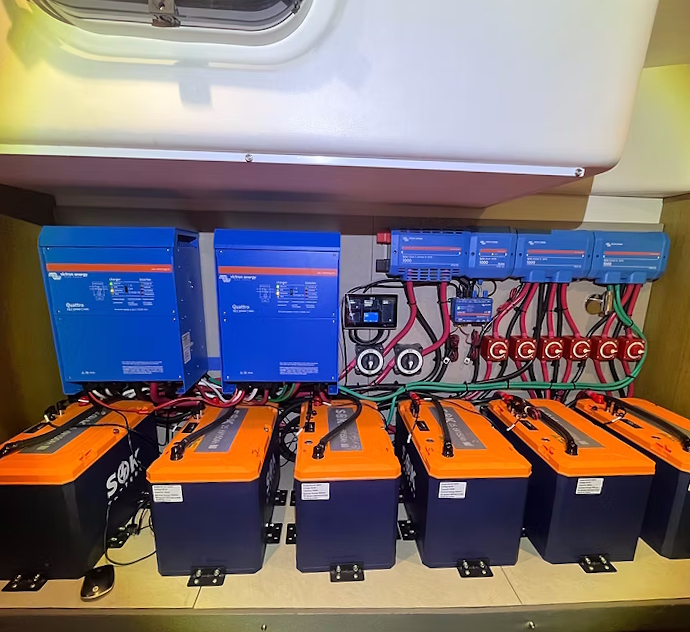
We built the Energy Hub Mini for exactly this. It's a complete system in one outdoor cabinet:
- 10kWh SOK LiFePO4 battery
- Victron 6kVA inverter with two built-in solar trackers
- Four 475W solar panels, with room to grow to 12
- AC input and output, so it can take a generator or grid connection
- Generator auto start
- Monitoring on your phone
- Everything prewired and set up before it leaves us
You site it, your electrician connects the solar and changes your plugs if needed, and you turn it on. There's no programming or configuring.
For a light or typical tiny home, a Mini with a sensible solar array and a small generator for the worst weeks will cover you all year.
Come and see one
We've got the Energy Hub Mini on display at the Tiny Home Show in Hamilton. Come and open the doors, ask questions and tell us how you plan to live. I'll give you a straight answer on what you need, even if that's less than you expected.
Can't make it? Get in touch with a rough list of what you'll run, and we'll help you size it.
Brendon
Written by
Brendon Shervell
Brendon helps New Zealanders size and set up lithium battery and solar systems at Sogen Energy.
More from the blog
by Sogen Energy||Marine
Our certified marine lithium battery is here: the SOK 24V 150Ah Marine
The SOK SK24V150PH-Marine is a 24V 150Ah LiFePO4 house battery, tested and certified to AS/NZS 3004.2. It's in stock in New Zealand and on sale now.