
Plug-in solar panels in NZ: is it legal yet, and what will it actually do?
by Brendon Shervell||Solar basics|9 min read
Last updated
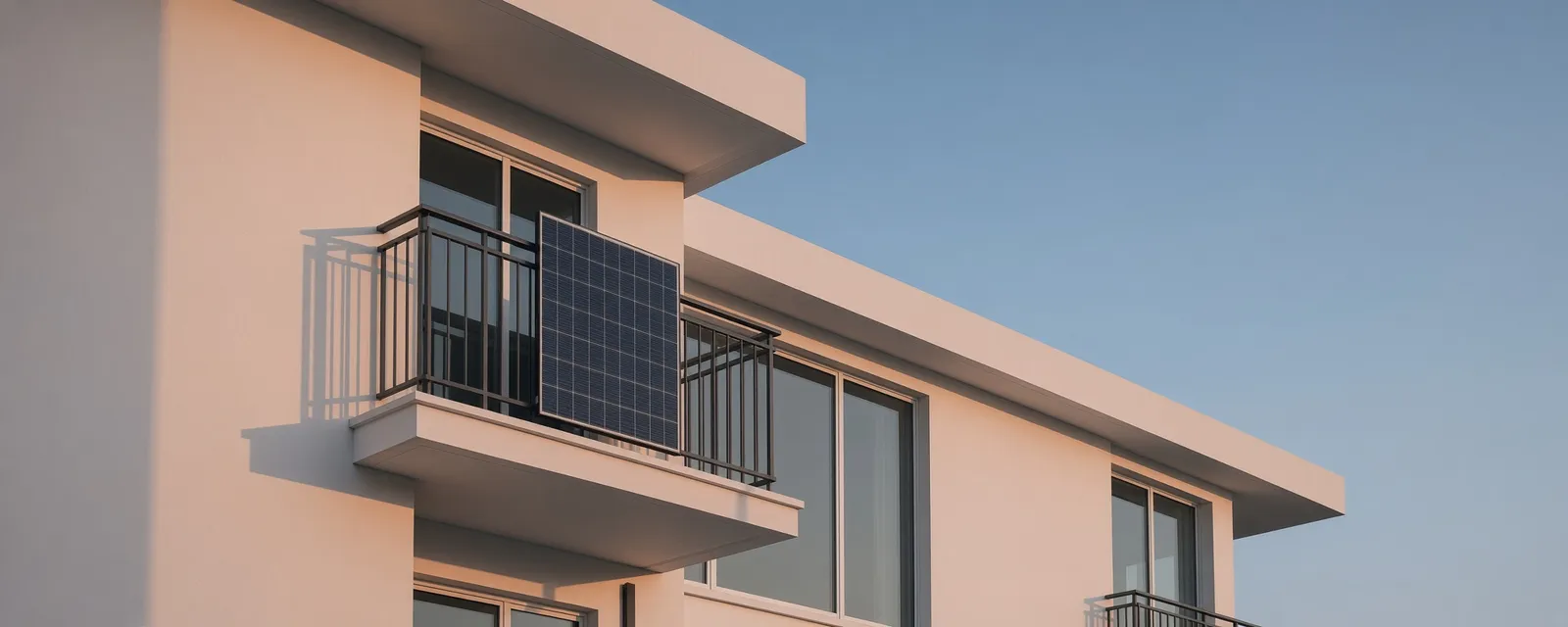
Quick answer: Plug-in solar panels (also called balcony solar) aren't legal to sell or use in New Zealand yet. Cabinet agreed in August 2026 to change the rules, and it's likely to happen in 2027. An 800W kit will save roughly $150 to $250 a year, but it shuts off in a power cut, so it's a daytime top-up, not backup power.
I've had a lot of people ask me about plug-in solar panels lately. The ones you see all over Europe: a panel or two hanging off a balcony rail, plugged straight into a wall socket.
Short answer: you can't get one here yet. They're not legal to sell or use in New Zealand, so they can't be imported and sold. But that's changing, and it's worth knowing what you're actually getting if you are thinking of buying one when they finally get approved.
What are plug-in solar panels?
Plug-in solar (also called balcony solar) is a small kit. Usually 1 or 2 panels, each around 400 to 450W, and a micro inverter rated around 600 to 800W. The inverter turns the panels' DC into 230V AC and feeds it into your house through an ordinary power point.
No roof work, no electrician, no consent. You hang it on a balcony, a fence or a sunny wall, and plug it in. When you move house, it comes with you.
It doesn't run the house. It tops up whatever's running during the day, so you buy a bit less from the grid.
Is plug-in solar legal in New Zealand?
Not yet.
The kits rely on plug-in inverters, and those have been banned in NZ since 2012 under a WorkSafe prohibition notice. The worry was that a conventional inverter could leave 230V on the exposed pins of the plug. That ban was written before modern micro inverters with proper anti-islanding and automatic shutdown were common.
Here's where things are at:
- July 2026: The Ministry for Regulation's solar review recommended legalising plug-in solar. It was 1 of 15 recommendations to make solar faster and cheaper to install. The review said the safety concerns could be handled with product certification and output limits, like other countries do.
- 10 August 2026: Cabinet agreed to progress regulatory amendments to enable plug-in solar.
- September 2026: The Electricity Authority asked for feedback on plug-in generation, to work out what rule changes it might need if the Government allows it.
- November 2026: Still not legal to sell or use. The Government is working out what it will take to allow it.
When will plug-in solar be legal?
The review estimated the plug-in rule change would take 9 to 12 months, and the full reform package up to 18 months. Realistically, this is a 2027 story.
Every main party said before the election that it supports plug-in solar, so whoever forms the government, this looks like it's happening. The question is when, and what the rules look like.
My guess is we'll end up with something close to Germany and the UK: certified micro inverters only, an output cap of around 800W, and approved plugs and cables. Western Australia announced in November 2026 that it will legalise plug-in solar too. Australia and NZ share the same inverter standard (AS/NZS 4777), so whatever they work out should carry across.
How much will plug-in solar save?
Let's be realistic about the numbers.
An 800W kit makes around 500 to 700kWh a year in a good NZ spot, according to PoweredNZ. Anywhere from 250 to 790kWh, depending on where you live and how it's mounted. Rewiring Aotearoa estimates a plug-in system could cover about 7 to 15% of an average home's daily power use. At around 39c/kWh, PoweredNZ puts the saving at roughly $150 to $250 a year. Overseas, kits sell for the equivalent of $600 to $1,500. If NZ prices land somewhere similar, payback is roughly 4 to 8 years.
That's a modest return for a small outlay. But it's a top-up, not a fix for your power bill.
The savings depend on using the power as it's made. A plug-in kit has no battery, so anything your house isn't using at that moment goes back into the grid, and in NZ you get paid a lot less for exports than you pay for imports. It works best in a home with a steady daytime load: a fridge, a freezer, someone working from home.
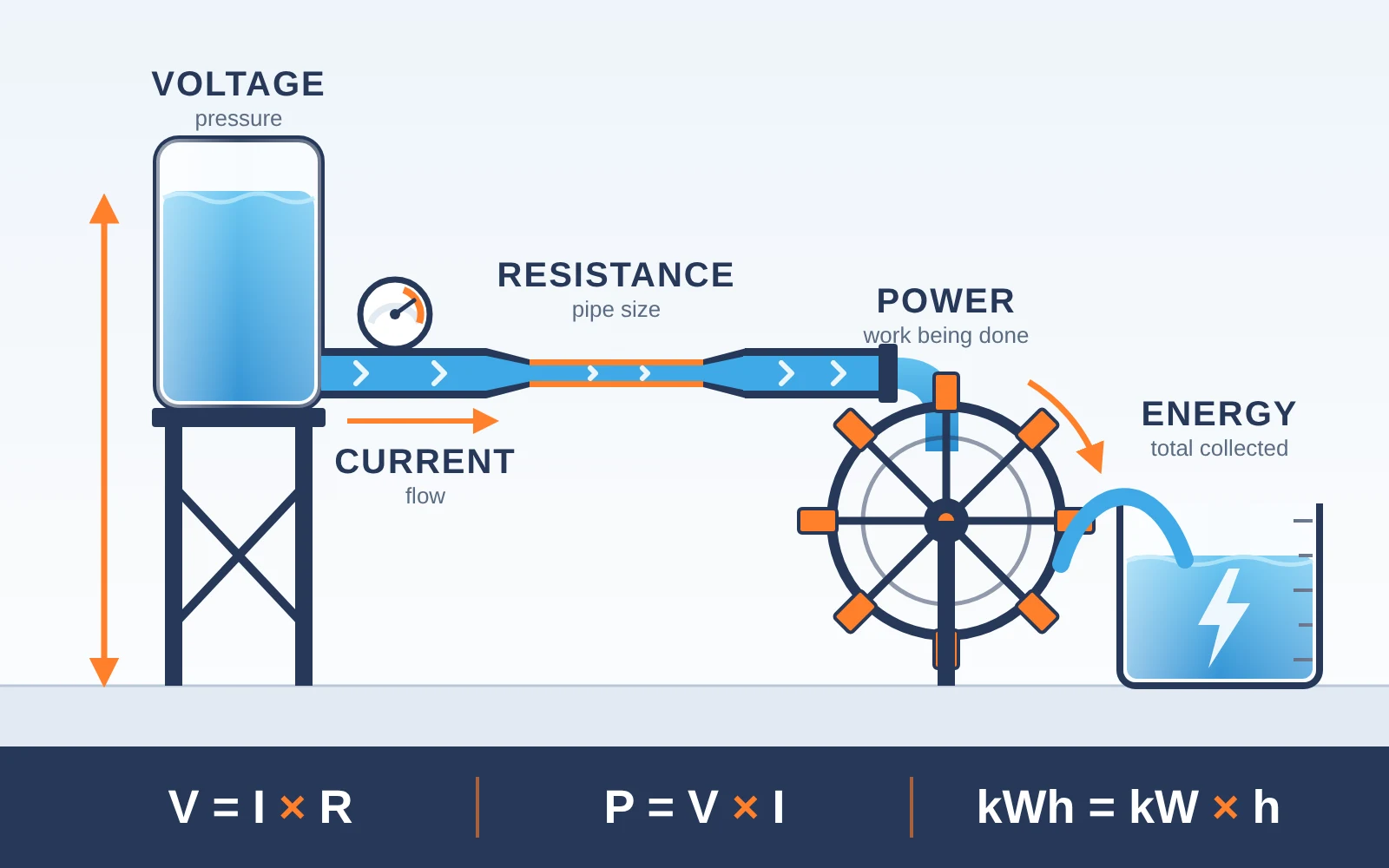
Not sure what a kWh actually is? Our plain English guide to volts, amps, watts and kWh explains it with water.
Does plug-in solar work in a power cut?
No. This is the bit I want people to understand.
A plug-in kit is grid-tied. When the power goes out, the micro inverter has to shut down straight away. That's the anti-islanding protection, and it's there so it doesn't feed power back into lines that a lineman thinks are dead.
So in a storm or an outage, your plug-in solar makes nothing. Not even with the sun out.
If what you actually want is backup power, you need a solar battery and an inverter that can run your house (or part of it) off grid. That's a different system, and it needs an electrician. Our 48V rack batteries are what most people use for home backup, or the Energy Hub Mini is a complete system in one outdoor cabinet. For whole homes and serious backup, the Energy Hub Midi is the bigger version, with 10 to 30kWh of storage.
Plug-in solar vs portable solar panels
People mix these up a lot, so it's worth being clear.
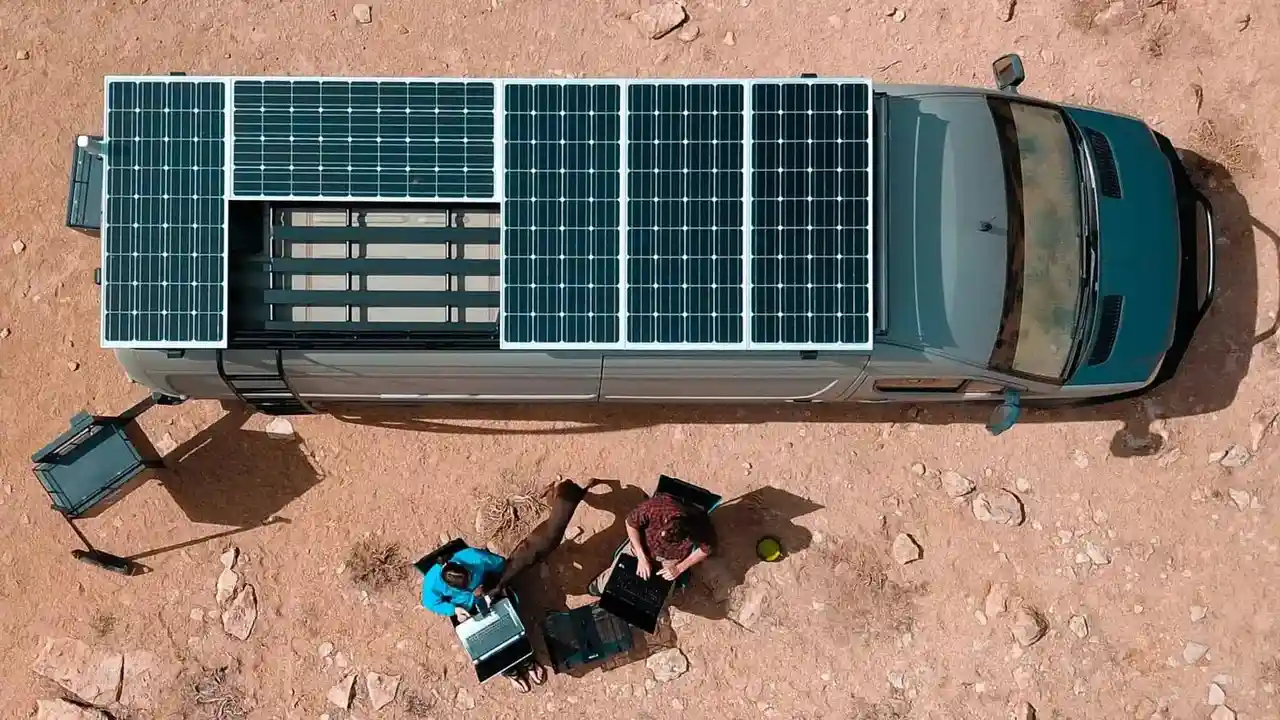
Portable solar panels charge a battery or a portable power station. They're used in vans, caravans, boats, sheds and for camping. They don't connect to your house wiring, so you can use them right now. A portable panel with a 12V lithium battery is a good setup for a van or a bach.
Plug-in solar feeds power into your home's wiring through a power point. That's the part that's not allowed yet.
Who plug-in solar suits
Plug-in solar is a great idea for:
- Renters who can't put panels on the roof
- Apartments and townhouses with a sunny balcony or wall
- Body corporate buildings where rooftop solar is a fight
- Anyone who wants a small, cheap start with solar
It's not the answer if you want backup power, want to cut your bill by more than a slice, or you're off grid. For off grid, have a look at what a tiny home system actually needs.
What to do now
You can't buy one here yet, and don't bother trying to import one, as it's not legal. They can't legally be sold or used until the rules change. The Government is still working out what it will take to allow them, and that will almost certainly mean certified, NZ-approved inverters and plugs. A kit bought off an overseas website today may never be compliant.
In the meantime:
- Work out where a kit would go. North-facing, unshaded from about 10am to 3pm is ideal. West-facing is good for afternoon use.
- Think about the power point. An outdoor-rated socket close to the panels is best. Never run one through a multibox or double adaptor.
- If you rent, talk to your landlord about brackets on the balcony or wall.
- Look at your power bill and see how much you use during the day. That's what a plug-in kit can offset.
And if you've realised you want more than a top-up, like backup through a power cut, a big cut in your bill or a fully off-grid setup, that's where a proper battery system comes in. Get in touch and tell me what you're trying to do.
Brendon
Plug-in solar FAQ
Is plug-in solar legal in New Zealand? Not yet. Plug-in inverters have been banned in New Zealand since 2012 under a WorkSafe prohibition notice, so plug-in solar kits can't legally be sold or used. Cabinet agreed in August 2026 to progress the rule changes needed to allow them.
When will plug-in solar be legal in NZ? The Ministry for Regulation estimated the plug-in rule change would take 9 to 12 months from its July 2026 review, with the full reform package taking up to 18 months. Realistically, it's likely to be some time in 2027.
How much will plug-in solar save? PoweredNZ estimates an 800W kit makes around 500 to 700kWh a year in a good NZ spot, saving roughly $150 to $250 a year at about 39c/kWh. Rewiring Aotearoa estimates it could cover about 7 to 15% of an average home's daily power use.
Does plug-in solar work in a power cut? No. Plug-in solar is grid-tied, so the micro inverter shuts down as soon as the power goes out, even when the sun is shining. For backup power you need a battery and an inverter that can run off grid.
Can renters use plug-in solar? Once it's legal, yes. Plug-in kits need no roof work or electrician and can move with you, which is why they suit renters and apartments. You'll still want your landlord's OK for any brackets on a balcony or wall.
Are portable solar panels the same as plug-in solar? No. Portable solar panels charge a battery or power station and don't connect to your house wiring, so you can use them now. Plug-in solar feeds power into your home's wiring through a power point, which is what's not yet allowed.
Sources
- Ministry for Regulation: Residential and small to medium scale solar review
- Ministry for Regulation: Solar Regulatory Review full report (July 2026)
- Electricity Authority: Plug-in generation (September 2026)
- RenewEconomy: NZ set to beat Australia to legalising plug-in solar
- The Spinoff: We're legalising it! (Plug-in solar)
- 1News: Report recommends NZ legalises plug-in solar
- My Mini Solar: Western Australia will legalise plug-in solar
- PoweredNZ: Plug-in solar NZ 2026
- Sunshine Solar: Plug-in solar NZ, the SolarSaver snag
- Wikipedia: Balcony solar power
- Lightforce: Solar election 2026
Written by
Brendon Shervell
Brendon helps New Zealanders size and set up lithium battery and solar systems at Sogen Energy.
More from the blog
by Brendon Shervell||Solar basics
Volts, amps, watts and kWh explained with water
Volts, amps, watts and kWh finally make sense once you picture them as water. A plain English guide to how solar, batteries and the grid really work.
by Brendon Shervell||Mobile
Getting your van or caravan battery ready for summer
A pre-season battery check for your van or caravan: state of charge, charging settings, connections, daily power use, and when to swap AGM for lithium.