
Getting your van or caravan battery ready for summer
by Brendon Shervell||Mobile|5 min read
There have been several horror stories where holiday makers have left for a long deserved holiday, only to find on their first few nights away their battery fails.
Nine times out of ten, a simple test run before they headed away would have ensured that there would have been no problems while on holiday. Issues usually arise from an aged battery or simply not maintaining it over the winter period.
All of that is easy to sort before you leave. Here's what I'd check.
1. Check where the battery is at after winter
If the van's been parked up since Easter, start here.
AGM and lead acid batteries slowly discharge on their own, and anything left connected (a gas alarm, a radio, the stereo clock) drains them faster. A lead acid battery that sits flat for weeks sulphates, and it never gets that capacity back. If yours has been sitting below about 12.2V, assume it's lost some.
Lithium (LiFePO4) holds its charge far better over winter. But if loads were left on, it can drain down to the BMS low voltage cut-off and switch itself off. That's the battery protecting itself, not a dead battery. Some chargers won't start on a battery that's switched itself off, so you may need a charger with a lithium wake function to bring it back.
Either way: put it on charge, let it reach full, then check it holds its voltage overnight with everything switched off.
2. Check your charging settings
This is the big one, especially if you've changed from AGM to lithium and kept the old charger.
Every charger in your van needs to be set for the battery you've actually got: the mains charger, the solar controller and the DC-DC charger off the alternator.
For a 12V LiFePO4 battery that usually means:
- Absorption (bulk) voltage around 14.2 to 14.4V
- Float around 13.5V, or float turned off
- No equalisation, ever
- Temperature compensation turned off
A lead acid profile on a lithium battery usually won't hurt it straight away, but you'll never get a proper full charge, and equalisation can push the voltage high enough to trip the BMS. Check your battery's manual for the exact numbers.
While you're at it, check how your house battery charges while you drive. If you've upgraded to lithium, you need a DC-DC charger between the alternator and the house battery. Lithium will pull as much current as the alternator can give it, and the DC-DC charger limits that current and charges the battery at the right voltage. If you're still on lead acid, a DC-DC charger isn't usually needed.
3. Check the connections
Ten minutes with a spanner saves a lot of grief.
- Terminals tight and clean, no white or green crust
- No cables rubbing through on the chassis
- Fuses the right size and seated properly
- No hot spots: run a big load for 10 minutes, then carefully feel the terminals and lugs. Warm is a loose or undersized connection
And give the solar panel a wash. A summer of dust and bird mess can knock a fair bit off its output.
4. Work out what you'll actually use
This is where most people get caught out. Summer loads are bigger than you think, and they add up overnight.
| What you run | Rough use per day (12V) |
|---|---|
| Compressor fridge | 30 to 50Ah |
| Diesel heater (cool nights) | 10 to 20Ah |
| LED lights | 5 to 10Ah |
| Phones, laptop, cameras | 10 to 20Ah |
| Water pump | 2 to 5Ah |
| Starlink Mini | 30 to 60Ah |
| Coffee machine, hair dryer or kettle on an inverter | 20Ah+ per use |
A couple with a fridge, lights, devices and Starlink can easily use 100Ah a day. Add an inverter for the coffee machine and it climbs fast.
Now compare that to what your battery can actually give you. A 100Ah AGM gives you about 50Ah before you start shortening its life. A 100Ah lithium gives you close to the full 100Ah.
So if you've got a single 100Ah AGM and you use 100Ah a day, you're in trouble. Most people won't use that much, but remember you can only use about 50% of an AGM. If you're getting near 50Ah on a light day, that's a pretty good sign your battery is undersized.
Our battery size calculator works it out from your appliances in a couple of minutes.
The easiest way to know for sure is a battery monitor. A Victron BMV-712 shows you exactly how many amp-hours you're using, live on your phone. Run the van for a weekend at home before you leave and you'll know where you stand.
5. Is it time to go lithium?
If your AGM is a few years old, didn't survive winter well, or just isn't big enough, this is the time to change. Here's what you get:
- About double the usable capacity for the same rated amp-hours
- Roughly half the weight
- Much faster charging from solar and the alternator
- No damage from sitting part charged, which is how a van battery spends most of its life
- Thousands of cycles instead of a few hundred
What to plan for when you swap:
- Chargers: all of them need a lithium profile (see step 2). Older chargers may not have one.
- Alternator: lithium will pull as much current as your alternator can give it. Fit a DC-DC charger to protect the alternator and charge properly.
- Size: go by your daily use from step 4. For most couples doing a few nights off grid, 200Ah of lithium is a comfortable place to start.
- Monitoring: a BMV-712 or a battery with Bluetooth, so you can see what's going on.
We stock the SOK 12V range from 100Ah up to 314Ah, plus the BMV-712, and we can match them to what you're running.
Your pre-trip checklist
- Battery fully charged and holding its voltage overnight
- Mains charger, solar controller and DC-DC charger all on the right battery profile
- Terminals tight, cables clear, fuses correct
- Solar panel clean
- Daily use worked out, and the battery is big enough for it
- Battery monitor working
Tick those off and the only thing you'll need to worry about is where to park.
Brendon
Written by
Brendon Shervell
Brendon helps New Zealanders size and set up lithium battery and solar systems at Sogen Energy.
More from the blog
by Brendon Shervell||Off grid, Tiny home
Can an Off-Grid Solar System Run an Incinerating Toilet?
Can off-grid solar run a 2kW electric incinerating toilet? A real NZ tiny home test, the winter maths, and five things to check before you switch from LPG.
by Brendon Shervell||Solar basics
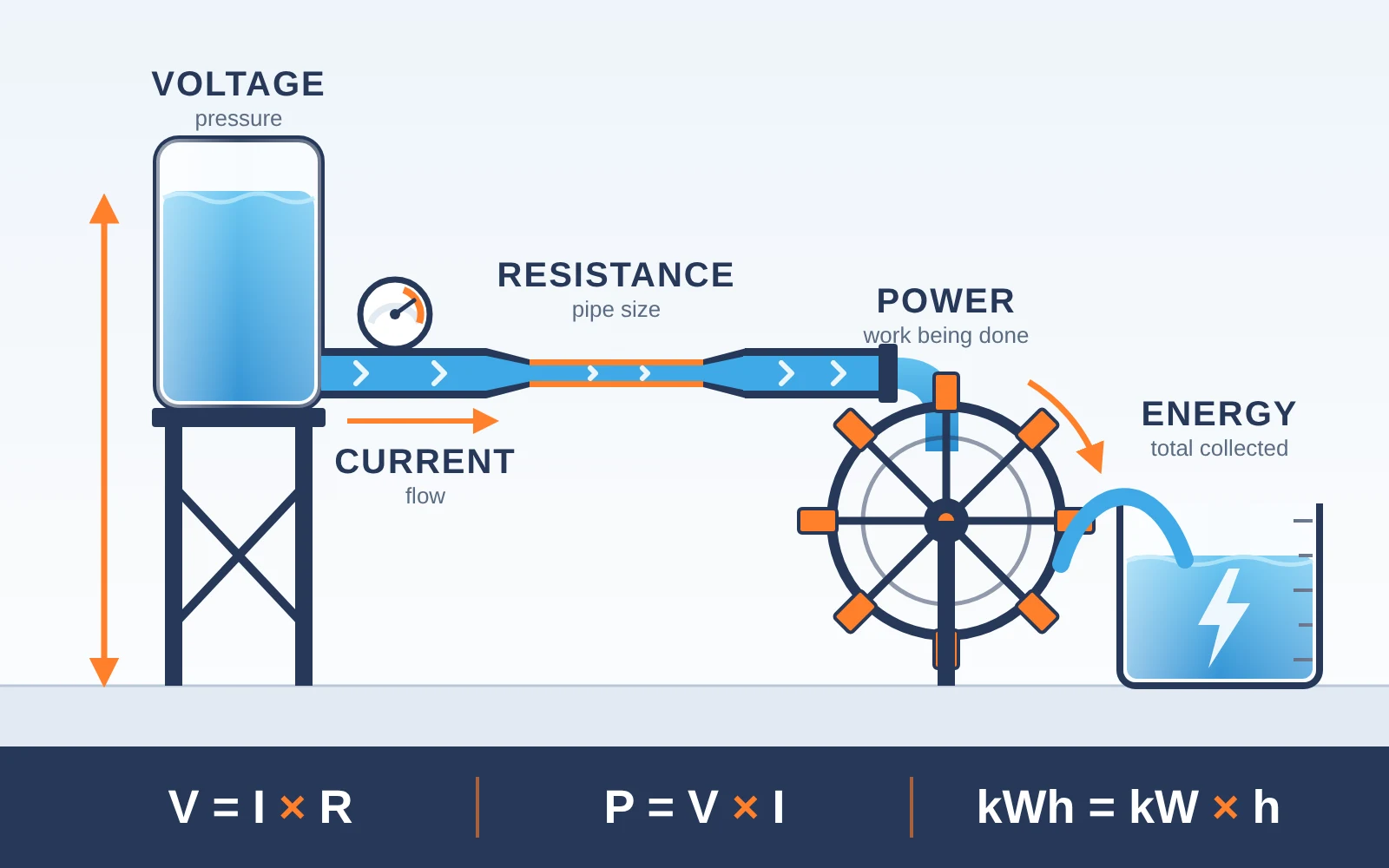
Volts, amps, watts and kWh explained with water
Volts, amps, watts and kWh finally make sense once you picture them as water. A plain English guide to how solar, batteries and the grid really work.